
Archive: Fracking/Petro
FOR IMMEDIATE RELEASE: November 4, 2024Media Contact: Lisa DePaoli, lisa@centerforcoalfieldjustice.org, 412-229-7116 Cecil residents score a huge win: Increased setbacks for new well pads! Board of Supervisors applauded for prioritizing community’s health and well-being CECIL TOWNSHIP, PA – Tonight, after several hearings and years of community members’ working together and publicly raising their concerns, Cecil Township residents […]
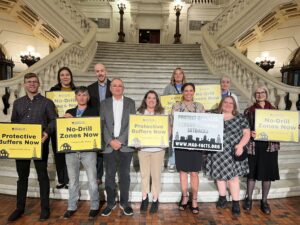
On Monday, October 22, CCJ Organizers Jodi Borello and Tonya Yoders attended a Press Conference in Harrisburg to announce the Setback Campaign introduced by the Clean Air Council and Environmental Integrity Project. They filed a rulemaking petition with the Environmental Quality Board asking to increase the setback distance from fracking wells. We are asking for […]
The Department of Environmental Protection (DEP) regulates oil and gas development in Pennsylvania. DEP shoulders the burden of regulating energy development and protecting the Commonwealth’s intrinsic rights to clean air, water, and the environment. With that contextualized, we will break down some of the recent funding and programs DEP has created and why they are […]
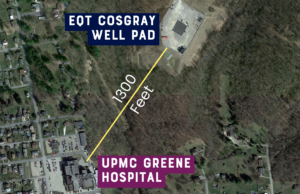
On August 27, 2024, the Franklin Township Zoning Board in Greene County held a meeting to hear Rice Energy/EQT representatives present their plans for expanding their operations on an existing well pad. The Cosgray well pad is near Bonar Ave and is roughly 1300 ft. from the Waynesburg Hospital. It was initially permitted for ten […]
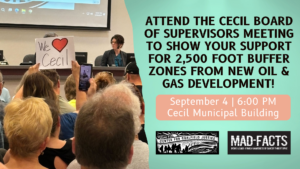
In recent months, Cecil Township has seen a cornucopia of proposed maps, ordinances, and social media posts concerning its oil and gas zoning ordinance. Today is no exception, as the Board of Supervisors (“Board”) has announced on social media that they plan to propose a strict 2,500-foot setback from all “protected structures.” This decision came […]
Washington, PA – Yesterday, CNX Resources released a statement with the ostentatious claim that there are no public health risks that result from their fracking operations — a claim based on just nine months of air quality data selected from two of their fourteen testing locations. This flies in the face of the fact that there are active complaints against them by residents of one of these very well sites at this time. Their release is also a weak argument against one of the many peer-reviewed studies done by qualified researchers in respectable universities that strongly suggest a range of health and environmental harms that occur due to fracking.