
Archive: Closing Haz Loophole

This is Part II of a blog series looking at the radioactivity of oil and gas waste. If you have not read part one yet, we recommend doing so to understand the full concept of the story. Read Part I: The Cecil Pipeyard, Washington County’s Open Hazardous Secret here. On March 13th, 2026, the Department […]

The oil and gas industry in our region is plagued by a very dangerous, open secret: the waste it produces is highly radioactive. Despite what industry representatives, members of Congress, and regulators say, every facet of the waste stream of fracking in PA is riddled with radioactive byproducts that are mishandled and sometimes simply left […]

Per the Air Pollution Control Act, operations that emit major sources of air pollution are required to obtain, and operate in compliance with an operating permit. In Pennsylvania, these permits are known as Title V Permits. Each permit lays out what kind of pollution is being emitted, how much, and what steps the operator is taking to reduce air pollution. When an operator applies for a new or renewed application, the DEP allows for a 30-day public comment period.
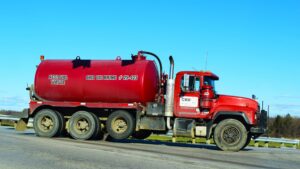
Ted Auch, FracTracker Alliance, 2015. There is a long history of regulating “road dumping” which, essentially, is the disposal of oil and gas wastewater onto public roads. Due to some legislative loopholes, the by-product from conventional and unconventional drilling was legally allowed to be released on public roads, despite the number and concentration of harmful […]
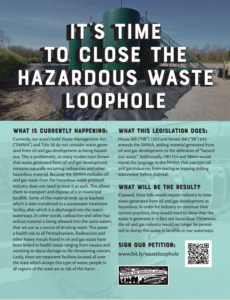
Under current PA law, oil and gas waste is not classified as hazardous, although it contains radioactive and other dangerous materials. This waste is allowed to be disposed of in our local landfills. Eventually, some of this waste makes its way into our streams and rivers, posing a health risk to all Pennsylvanians. CCJ has […]
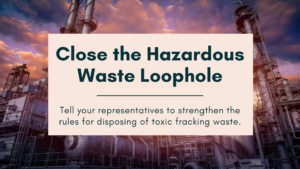
Because of a shortsighted exemption made 30 years ago, Pennsylvanians are exposed daily to potentially toxic and radioactive waste produced by the oil and gas industry. For the last three decades, these companies have taken advantage of a loophole in state laws governing the disposal of toxic drilling waste.